First to answer wins.
That's you now.
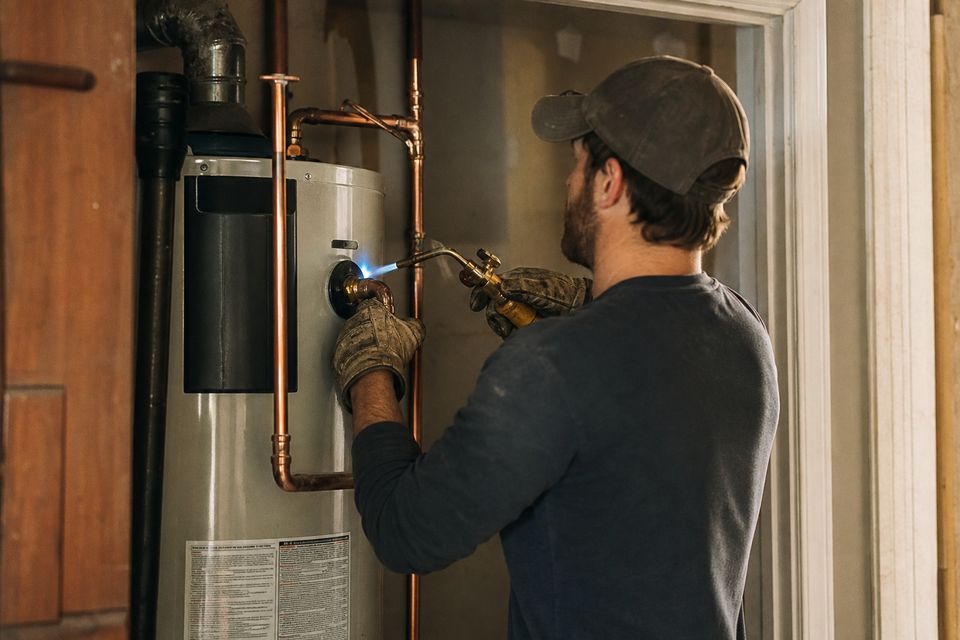
When a water heater lets go, the homeowner calls down the list and the first shop that picks up gets the job. ServiceRelay answers every ring — wrists-deep, after hours, mid-repipe — triages emergency from estimate, and books it straight into your system.
Built around how a plumbing shop actually runs.
Emergency triage to booked job — around the clock.
Serving and the towns around it.

Where does AI actually fit in a plumbing business?
In the front office — not under the sink. The AI answers when your hands are full, sorts the burst pipe from the dripping faucet, books both correctly, and follows up on the quotes you already wrote. The wrench work and the judgment calls stay yours.
- Fri 6:32 PM · water heater leaking. Three rings, no answer. The third name on the list got the job.
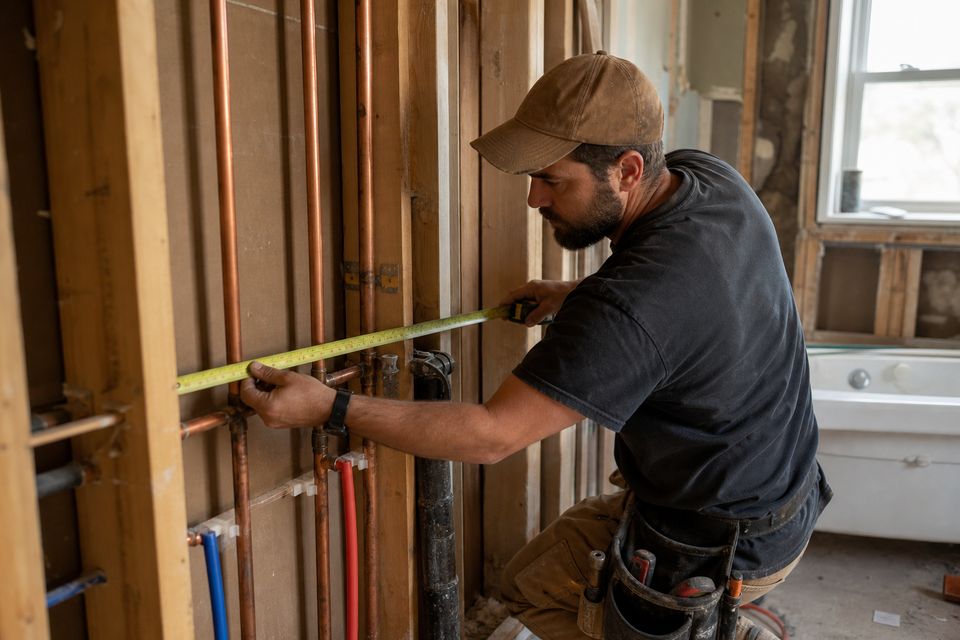
- The repipe quote went out Monday. Nobody followed up. 'We went with someone who called back.'
- 2 AM burst pipe — voicemail. They kept dialing until somebody answered. It wasn't you.

What does it handle for every plumbing shop?
The baseline kit — the calls, bookings, and follow-through every shop bleeds without. Each piece writes into the tools you already run.
Every call answered
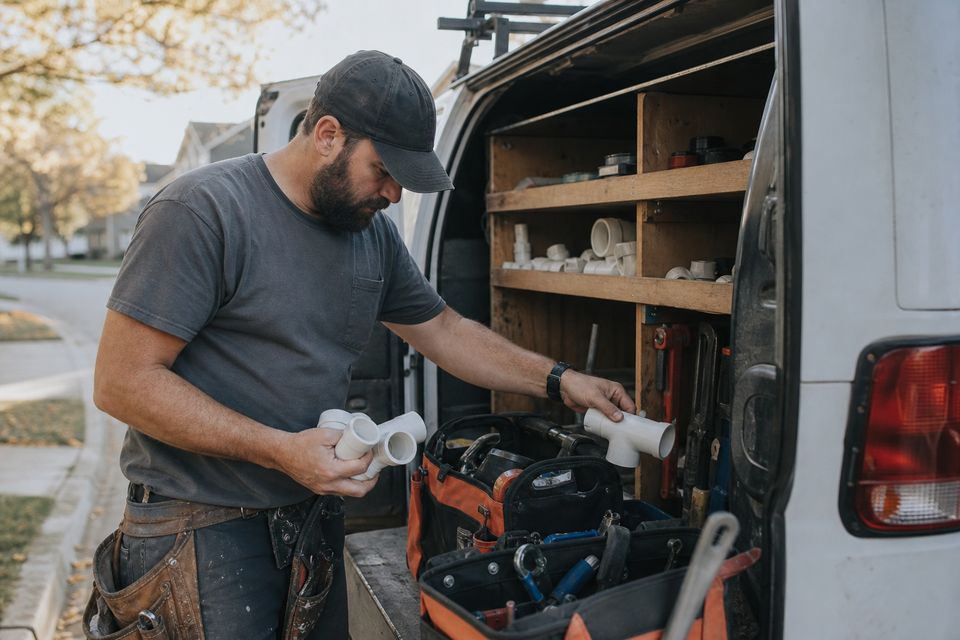
Under a house, in a crawlspace, after hours — the agent picks up as your office, every time it rings.
Triaged and booked
Emergency or estimate, repair or replace — sorted on the call and booked straight into your calendar or dispatch board.
Quotes that get chased
Every quote gets a follow-up cadence the moment it goes out — until it books or says no.
Reminders that kill no-shows
Appointment confirmations and day-before reminders fire on their own, so the door actually opens.
Reviews on autopilot
The review ask goes out when the job closes — while the fixed leak is still front of mind.
Missed-call text-back
If a call ever does slip, the caller gets a text in seconds — before they dial the next plumber.
What does it do that only matters to plumbers?
The trade-specific pieces — configured around emergencies, on-call rotation, and the callbacks that fall through cracks.
Emergency triage
Burst pipe and sewage backup route as urgent, per your rules. The dripping faucet books a normal slot. The agent knows the difference because you told it once.
On-call routing
After hours, only true emergencies ring the on-call tech. Everything else is booked, logged, and waiting in the morning — nobody gets woken up for a running toilet.
Parts & permit callbacks
When the part lands or the permit clears, the callback and the booking fire on their own — the job that used to stall for two weeks keeps moving.
What does a real call sound like?
This is the shape of it — your greeting, your questions, your calendar. Configured to how your shop answers, not a script we hand every plumber.
Hi — my water heater's leaking all over the garage floor. Can you get somebody out?
We can. First — is it spraying, or a steady leak? And do you know if the water to the tank is shut off?
Steady leak. I just shut the valve off, I think it worked.
Good — that buys you time. We can have someone out tonight on the emergency rate, or first thing tomorrow, 8 to 10. Which do you want?
Tomorrow morning's fine if it's not spraying, right?
With the valve off, tomorrow is fine. You're booked 8 to 10 — you'll get a text confirming, and a heads-up when the tech is on the way.
- Job booked — tomorrow 8–10, on the board you already run
- Lead logged: water heater, valve off, garage access notes
- Homeowner texted a confirmation + on-the-way alert set
- You get the text: "Water heater replacement booked, 8 AM."
All of that — the booking, the log, the texts — is the automation engine behind the agent doing its job the second the call ends. The agent is one piece of the suite; the follow-through is the rest.
The pieces plumbing shops start with.
Each one stands alone — buy the piece that's bleeding the most and add the rest when it's earning its keep. See all plans · price your build →
Industry voice agent
A proven agent for your trade — start from the standard build (say, roofing) and customize it to how you answer.
Lead funnel build-out
A web form feeding leads straight into your CRM or process, with the follow-up cadences built around how you sell.
Connected site
Everything in the starter, wired to the systems you already run — booking, CRM, the tools your leads flow into.
What plumbers ask before they buy
Will callers know it’s AI?
It answers as your office and handles the call naturally. It never pretends to hold a wrench — and the caller gets what they wanted: an answer and a booked visit instead of voicemail.
What counts as an emergency? Who decides?
You do, once. Burst pipe, sewage, no water — whatever you define as urgent routes to the on-call phone. Everything else books a normal slot. The rules are yours; the agent just runs them all night.
Does it work with ServiceTitan, Housecall Pro, or my setup?
If it has an API — and the plumbing platforms do — we wire it. Booked jobs and lead notes land in the system you already run. Paper book and a cell phone? We'll meet you there too.
What happens at 2 AM?
The call gets answered, triaged by your rules, and either your on-call tech gets rung or the job is booked for the morning with the caller reassured. Either way it's logged and nothing waits on a voicemail.
How fast can it be answering my phone?
Days, not months. The plumbing agent starts from a proven build and gets configured to your greeting, your service area, and your on-call rules on a call with us.
What does it cost?
The industry voice agent is $99/mo (usage overages billed to you). Everything else is à la carte — start with the piece that's bleeding the most. Full pricing is on the pricing page.
Also built for: Roofing · Tree service · Pools · HVAC · Restoration · Landscaping · Pest control · Electricians · all industries · the five systems
The next emergency call is coming. Answer it.
Tell us how your shop runs and we'll show you the agent picking up live — your greeting, your triage rules, your calendar.